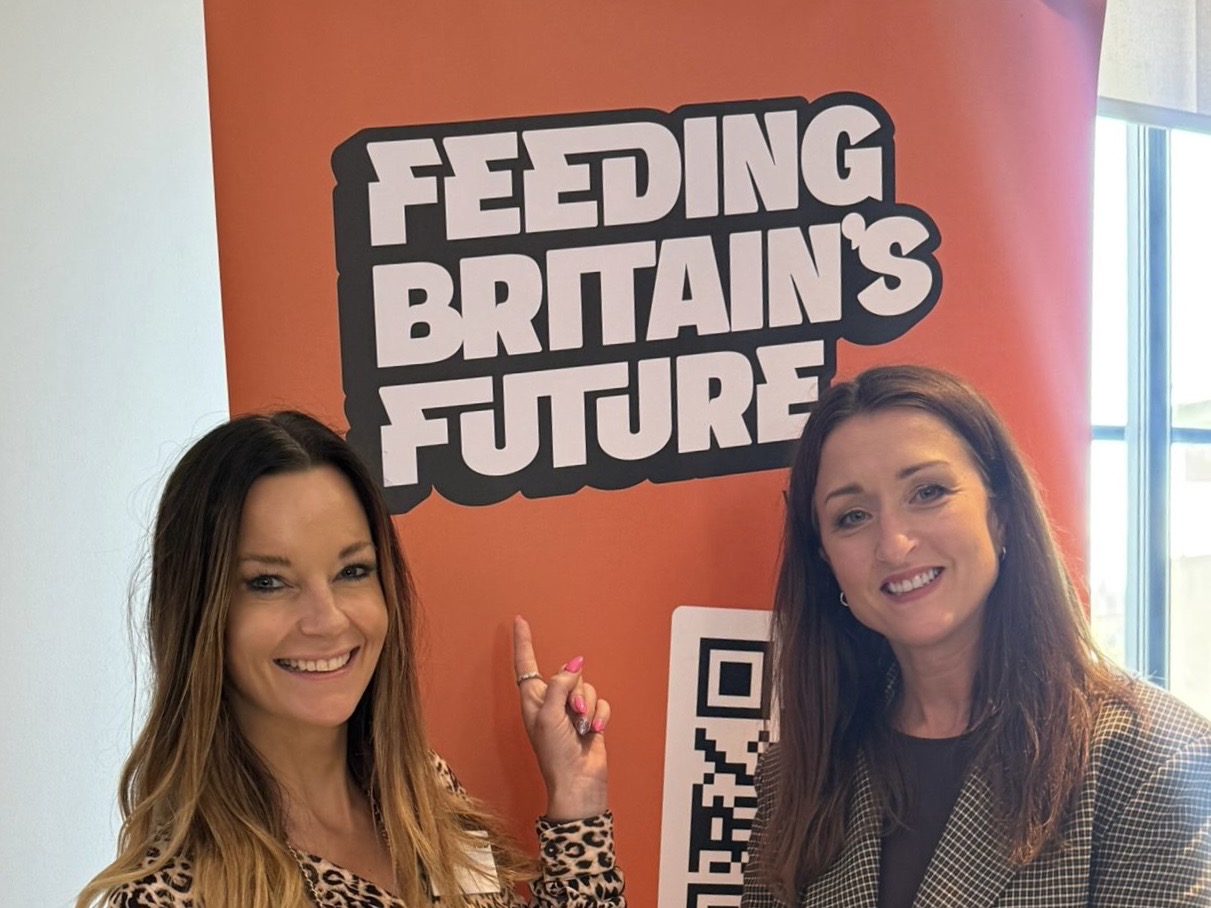
This week, we attended IGD’s Feeding Britain’s Future event in Westminster.
The headline statistics were impossible to ignore.
According to the interim review into Young People and Work, led by former Cabinet Minister Alan Milburn, almost one million young people in the UK are currently not in education, employment or training (NEET). That’s roughly one in eight 16 to 24-year-olds. The report warns that the UK is at risk of creating a “lost generation” and estimates the economic cost of youth inactivity at £125 billion.
At the same time, opportunities for young people are becoming harder to find. Recent research shows online advertisements for starter jobs have halved over the past decade, leaving three young people competing for every entry-level role nationally, and far more in some regions.
On the surface, these might appear to be separate challenges.
They aren’t.
They’re the same problem viewed from different angles.
We have spent decades working alongside food and drink businesses, we see it every day. We see manufacturers, retailers and suppliers struggling to attract talent. We see businesses worried about future skills shortages. We also see school leavers and graduates finding it harder than ever to secure that crucial first opportunity.
Traditional routes into work are shrinking.
Graduate schemes are more competitive. Entry-level roles are under pressure. Economic growth remains sluggish. Businesses are understandably cautious about hiring.
For many young people, it has become a frustrating cycle. They need experience to get a job, but they need a job to gain experience.
And that should concern all of us.

The Industry Doesn’t Have A Talent Problem. It Has An Awareness Problem.
One of the strongest messages from the event was that many young people simply don’t understand the breadth of careers available across the food and drink industry.
And frankly, that’s not surprising.
For years, the sector has done an incredible job of building brands consumers know and love. It has invested millions in marketing products, creating demand and driving growth.
But it has spent far less time marketing itself as a place to build a career.
When many people think about food and drink, they still picture factories, warehouses or supermarket shelves. What they don’t see are careers in engineering, automation, sustainability, logistics, data, technology, commercial leadership, innovation, communications and marketing.
They don’t see an industry that employs more than four million people and supports one in eight jobs across the UK. They don’t see the thousands of people who started in entry-level roles and now lead major businesses. And they don’t see an industry that has historically provided one of the strongest pathways for social mobility in the country.
That’s not a recruitment problem.
It’s a communications problem.
Employer Brand Has Never Mattered More
One point kept coming up throughout the day: young people can’t aspire to careers they don’t know exist.
That feels particularly relevant in light of Alan Milburn’s findings.
His interim report argues that this challenge cannot be solved by government alone. Employers, educators, communities and industry bodies all have a role to play in reconnecting young people with opportunities.
We agree.
We spend a lot of time talking to clients about consumer reputation, but increasingly we’re talking about employer reputation too.
The reality is that attracting talent is becoming just as important as attracting customers.
Future employees want to understand what a business stands for. They want to see progression opportunities. They want to hear authentic stories from people like them. They want to know where a career could take them.
The businesses that tell those stories well will be the businesses that win the battle for talent.
The ones that don’t may find themselves struggling to fill roles regardless of how strong their consumer brands are.
Rethinking Work Experience
Another recurring theme was the need to rethink work experience.
One of the most striking findings shared at the event was that a young person who has four meaningful interactions with employers is dramatically less likely to become disconnected from education or employment.
Four interactions.
That’s not an impossible challenge for an industry of this scale. The traditional one-week placement isn’t always practical. Operational pressures, health and safety requirements and resource constraints all create challenges.
But that doesn’t mean businesses should step back. If anything, it means we need to become more creative. Virtual experiences. School workshops. Business simulations. Site visits. Mentoring. Short-term projects.
The format matters less than the impact.
Why Joe Public Is Supporting Feeding Britain’s Future
What encouraged us most was the willingness of businesses to collaborate.
More than 65 organisations have already signed up to the Feeding Britain’s Future pledge, including many of the UK’s largest retailers, manufacturers and suppliers.
At Joe Public, we’re proud to support that ambition. Not because we’re part of the food and drink industry, but because we’ve built our business helping food and drink brands communicate more effectively with the audiences that matter.
And right now, one of the most important audiences is the next generation.
The industry needs talented people. Young people need opportunities. Bridging that gap will require more than recruitment campaigns. It will require businesses, educators, government and industry bodies working together to change perceptions and create meaningful pathways into work.
That’s exactly what Feeding Britain’s Future is trying to achieve.
The Opportunity Is Too Important To Miss
Alan Milburn’s report talks about the risk of a “lost generation”. But sitting in the room at IGD, what was clear was that there is another possibility.
An industry that employs more than four million people has the scale, reach and influence to become part of the solution.
The food and drink industry has always played a vital role in feeding the nation.
Now it has an opportunity to help shape the future workforce that will power its next chapter.
The businesses that step forward won’t just be helping young people. They’ll be helping secure the long-term future of their own organisations and the wider industry.
If you’d like to find out more about Feeding Britain’s Future or sign up to support the pledge, visit https://www.igd.com/social-impact/workforce/feeding-britains-future
Because helping young people see a future in food and drink isn’t simply the right thing to do.
It’s one of the smartest investments the industry can make.