This week, I’ve been thinking all things Deposit Return Scheme (DRS). As an FMCG comms specialist, we’ve been interviewing the convenience store entrepreneurs in our C-Store Collabs group to understand more from the shopfloor. I also went along to Drink Tank to hear what the wider FMCG and hospitality industry had to say.
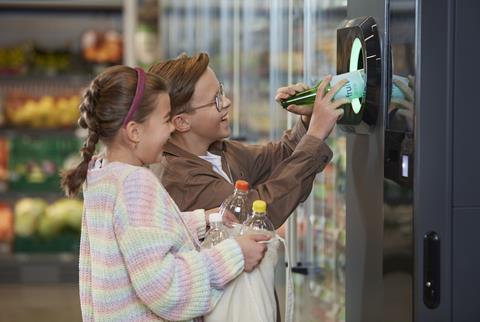
Picture a group of 15-year-olds after a game of football on a summer evening, empties in hand. Which shop do they pick? Amit Puntambekar, who runs a NISA store, put it perfectly: “The one where we can return our empties for a coupon to spend on anything we want.”

With launch set for 1 October 2027, the clock’s ticking. At Drink Tank, it got a proper airing from Exchange for Change, alongside the British Retail Consortium (BRC), the British Soft Drinks Association (BSDA) and the British Beer & Pub Association (BBPA).
Put what I heard on stage next to what our retailers told me and one question kept coming up for me. Retailers are getting ready. But are brands?
The panel kicked off with Andrew Opie’s parting shot, as he heads into retirement from the BRC, calling DRS the worst ever government policy. Nobody on stage agreed. The BSDA pointed to Ireland, where recycling rates have jumped from 49% to over 90% and litter has fallen by around 60%. The BRC made the simple point that once an empty can has a value, people pick it up.
Exchange for Change says it’s on track. It’s grown from a handful of people to almost 90 in a year and is now focused on the practical side, with machines going into stores. Its main consumer campaign starts in summer 2027.
Readiness is patchy, though. Exchange for Change’s own research found fewer than half of retailers feel ready, and the BRC said some small convenience stores may not have heard of DRS at all. Bigger retailers have had to invest before key details were confirmed, from logistics and storage to the IT that tracks each deposit. Wales adds another layer, with glass in its scheme and 16 million people living within 30 minutes of the Welsh border.
It isn’t all slow progress, though. At Newtrade’s Partners in Success event this week, Stefan Appleby shared that 23% of convenience stores have either planned and budgeted for a DRS solution or already have one in place. That’s miles ahead of where the channel was at the same point before the tobacco display ban. So while awareness is still slower than many would like, there are signs the channel is far more switched on and prepared than it has been for past changes.
Retailers are up for it
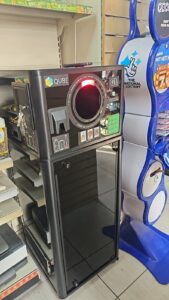
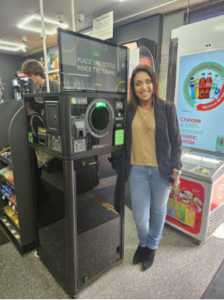
What struck me in my Joe Public C-Store Collabs conversations is how far ahead some independents already are. Nathalie Fullerton has installed a TrovrCube in her Go Local store in Glasgow. Nilesh Patel is having a Trovr machine fitted through his Fed membership, after going to Ireland to see the scheme in action.
Nilesh came back with an eye-opening lesson from Irish retailers: “Get ahead, or you could lose around 20% of your sales”. There’s already a waitlist for machines, and he met one small retailer without one who lost out badly and ended up stuck on it. He’s going early so his shoppers get used to returning empties, giving the returns to charity for now.
Amit started out planning to apply for an exemption. Then he looked at it from the shopper’s side. If the store down the road has a machine, that’s where the empties, and the voucher spend, will go. He’ll give up some selling space for it, but he’s confident he’ll gain footfall.
None of them are naive about it. Nathalie is worried about space, hygiene, collections, staff training, cash flow and a handling fee that reflects the work involved. Amit compares the machine to product availability: “If shoppers lose faith that your machine is working, they’ll save their bottles up and go and build that basket at the supermarket.”
Where brands come in
Retailers will be the face of DRS. They’ll explain the deposit, take the returns and deal with the frustration when something goes wrong. Yet when I asked about support from brands, the answers were thin. Nathalie wants “much more meaningful engagement” from the major drinks manufacturers.
For brewers, the stakes are high. The BBPA reminded the room that brewers sell around 4 billion cans of beer a year, and a deposit on an 18-pack is a noticeable number at the till.
The panel talked about ‘till shock’ in the first few months, though Ireland shows it settles once shoppers get used to it. Someone needs to help the person behind the counter explain it.
Here’s where I think brands can make a real difference:
- Talk to the trade before the consumer. The panel was clear that consumer messaging too early goes stale, or even encourages people to hoard cans. Trade comms is different. The BSDA talked about building an informed community of publicans and shopkeepers who can answer questions when shoppers start asking, and that work can start now.
- Make the changeover simple. Stock made before launch can still be sold, with a recommended sell-through to April 2028. Retailers need to know which of your lines carry a deposit and when, what the new labels look like and how multipack pricing will work.
- Give retailers something to use. Nathalie asked for practical training, educational materials and clear point of sale. A shelf-edge that explains the deposit on a multipack will save a lot of conversations at the till.
- Go through the people retailers already trust. Work with trade bodies, media, symbol groups and wholesalers, so independents get the same preparation as the multiples.
- Help build the habit. Nilesh is already getting customers used to the machine, and Nathalie sees a role for local schools, community groups and charities. Brands that help retailers make returns feel local will help the scheme stick.
What I’d want to see
If I were a FMCG brand, I’d start by listening to your customers who’ll make DRS work, then build a plan with them. Get to them now with something genuinely useful for the shopfloor, their customers and their local community. Do that well and you’ll do more than help the scheme launch smoothly. You’ll earn the trust of the people who decide what goes on the shelf.
Nathalie summed it up for me: “We are the backbone of our local communities, but we are not an unlimited resource.”
That’s where we come in. At Joe Public PR, we’ve spent the past few months in conversation with your customers on the frontline of DRS, and we know what they need from brands right now. If you want to turn DRS into a chance to build loyalty, let’s talk. Drop me a line and we’ll show you where to start.